

Web3 Security: Exploiting and Defending Decentralized Applications
Live On-Site / Live Virtual
Master Web3 Security Assessment
Learn advanced vulnerabilities and attack vectors in Web3 applications and how to defend against them. Cover smart contract auditing, DeFi protocol security, and blockchain-specific threats.
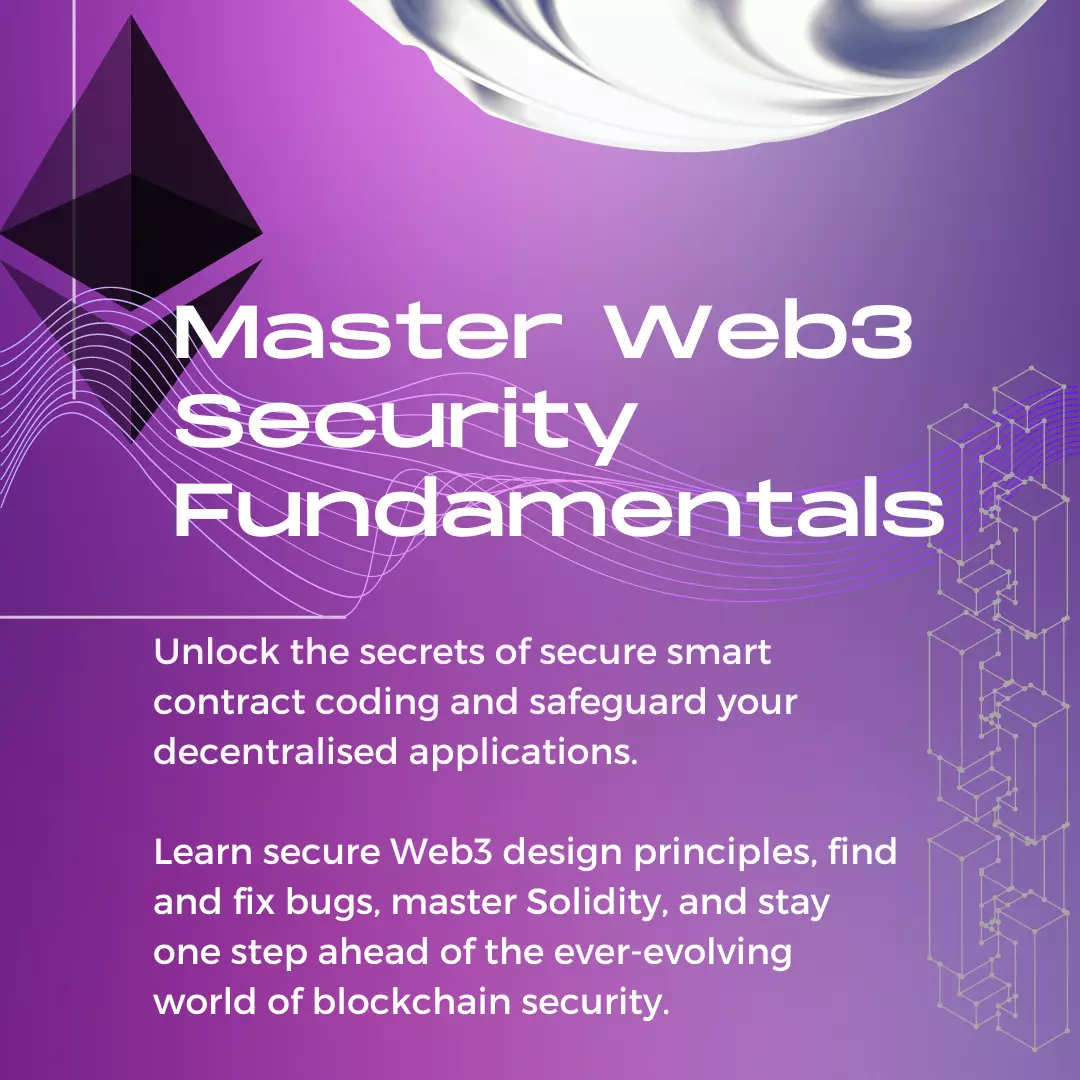
What You Will Learn
The Web3 ecosystem has seen billions of dollars lost to smart contract exploits, DeFi protocol hacks, and bridge vulnerabilities. This course provides a comprehensive deep dive into the security of decentralized applications, teaching you how to identify, exploit, and defend against the most critical vulnerability classes in blockchain-based systems.
You will start with the fundamentals of Ethereum architecture and the EVM execution model, then progress into hands-on exploitation of real-world vulnerability patterns including reentrancy, integer overflow, access control flaws, oracle manipulation, and flash loan attacks. The DeFi module covers AMM vulnerabilities, lending protocol attacks, governance manipulation, and MEV (Maximal Extractable Value) exploitation.
The course also covers industry-standard security auditing tools such as Slither, Mythril, Echidna, and Foundry, along with manual review methodologies used by professional auditors. You will learn defensive patterns using OpenZeppelin libraries, secure upgrade mechanisms, on-chain monitoring, and incident response procedures specific to blockchain environments.
Key Objectives
- ✓Understand Ethereum architecture, EVM internals, and transaction lifecycle
- ✓Identify and exploit reentrancy, integer overflow, and access control vulnerabilities
- ✓Exploit front-running, oracle manipulation, and flash loan attack vectors
- ✓Assess DeFi protocol security including AMMs, lending, and governance
- ✓Analyze bridge vulnerabilities and cross-chain attack surfaces
- ✓Understand MEV extraction and its security implications
- ✓Use Slither, Mythril, and Echidna for automated vulnerability detection
- ✓Write Foundry test suites for security verification
- ✓Apply secure development patterns with OpenZeppelin
- ✓Implement on-chain monitoring and incident response for Web3 systems
All our live trainings are highly customizable. We can tailor the content to cover topics specific to your team's needs. Contact us for more details.
Syllabus
Module 1: Blockchain & Smart Contract Fundamentals +
- •Ethereum architecture and consensus mechanisms
- •Solidity language fundamentals and patterns
- •EVM internals: opcodes, stack, memory, and storage
- •Transaction lifecycle and gas mechanics
- •Smart contract deployment and interaction
- •Setting up the development and testing environment
Module 2: Smart Contract Vulnerabilities +
- •Reentrancy attacks (single-function and cross-function)
- •Integer overflow and underflow exploitation
- •Access control and authorization flaws
- •Front-running and transaction ordering attacks
- •Oracle manipulation and price feed attacks
- •Flash loan attacks and economic exploits
- •Delegatecall and proxy pattern vulnerabilities
Module 3: DeFi Protocol Security +
- •AMM (Automated Market Maker) vulnerabilities
- •Lending protocol attacks and liquidation exploits
- •Governance attacks and vote manipulation
- •Bridge exploits and cross-chain vulnerabilities
- •MEV (Maximal Extractable Value) exploitation
- •Real-world DeFi hack case studies
Module 4: Security Auditing Tools & Techniques +
- •Static analysis with Slither
- •Symbolic execution with Mythril
- •Fuzz testing with Echidna
- •Foundry testing and invariant checks
- •Manual review methodology and code walkthrough patterns
- •Writing professional audit reports
Module 5: Defense & Best Practices +
- •Secure development patterns and checks-effects-interactions
- •OpenZeppelin library usage and best practices
- •Upgrade patterns (proxy, UUPS, beacon) and their security implications
- •On-chain monitoring and alerting systems
- •Incident response procedures for blockchain environments
- •Bug bounty programs and responsible disclosure
Prerequisites
To successfully participate in this course, attendees should possess the following:
- • Basic understanding of blockchain concepts and how Ethereum works
- • Familiarity with programming (Solidity or JavaScript preferred)
- • Basic knowledge of web application security concepts
- • Understanding of cryptographic fundamentals (hashing, digital signatures)
- • No prior smart contract auditing experience required
Duration
2 Days
Ways To Learn
- Live Virtual
- Live On-Site
Who Should Attend?
Smart contract developers, blockchain security auditors, penetration testers, and Web3 professionals.
Laptop Requirements
- • Laptop with 8+ GB RAM and 40 GB hard disk space
- • Cloud lab instances provided
- • Administrative access on the system
- • Setup instructions sent before the course
Trusted Training Providers
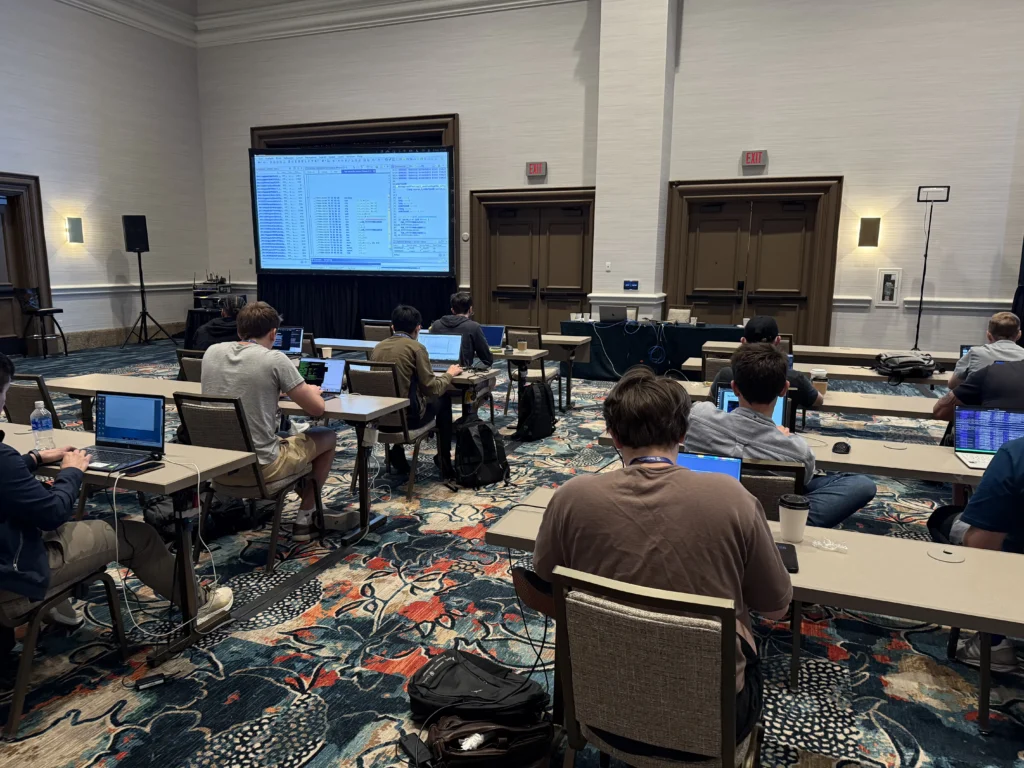
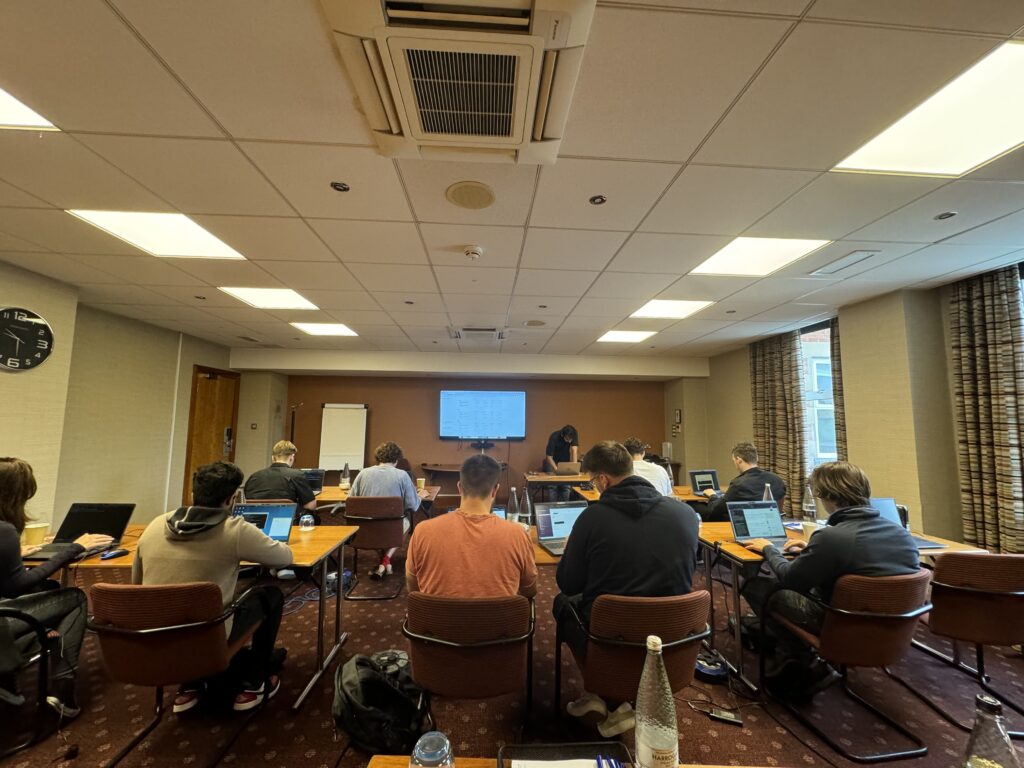
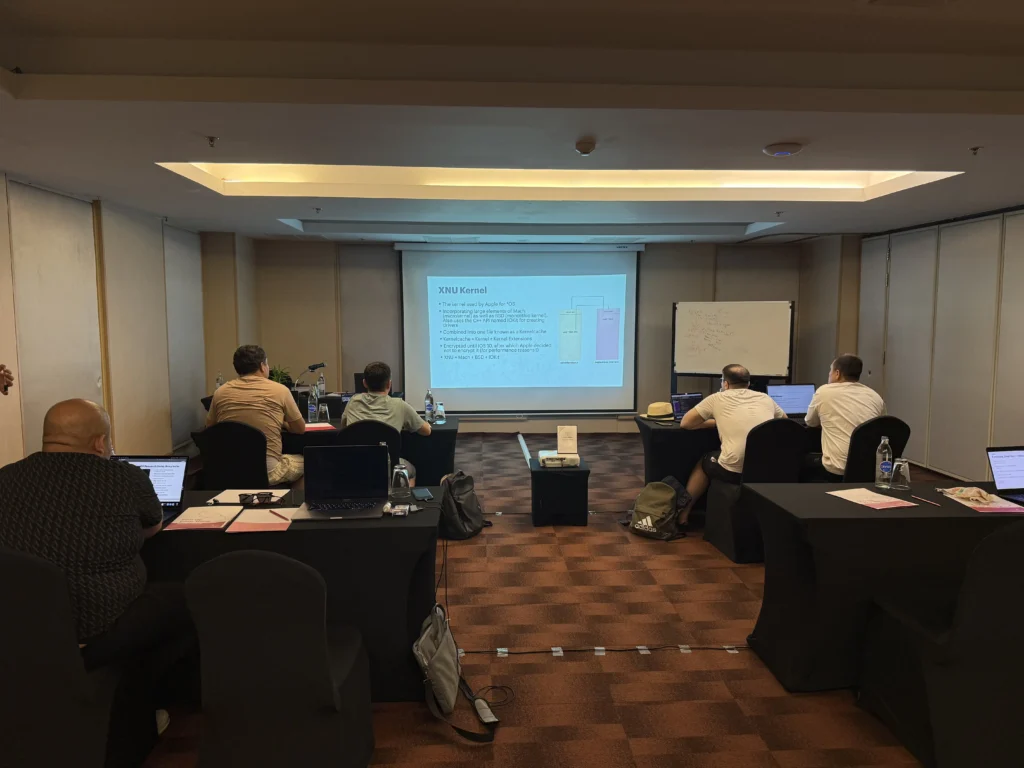
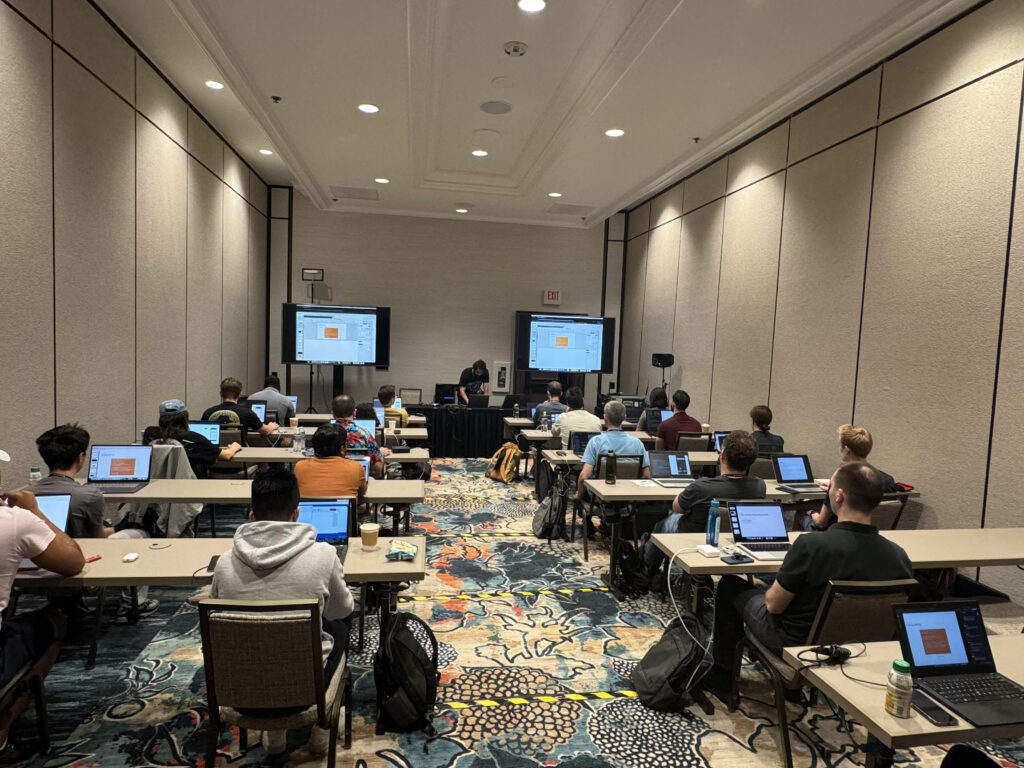
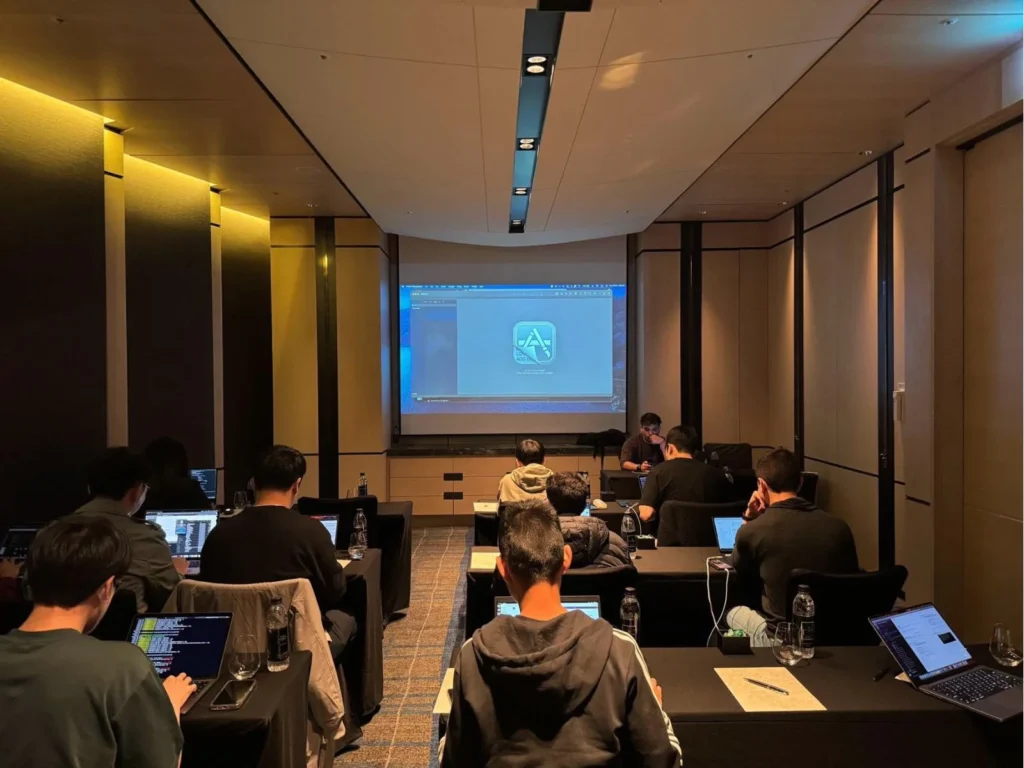
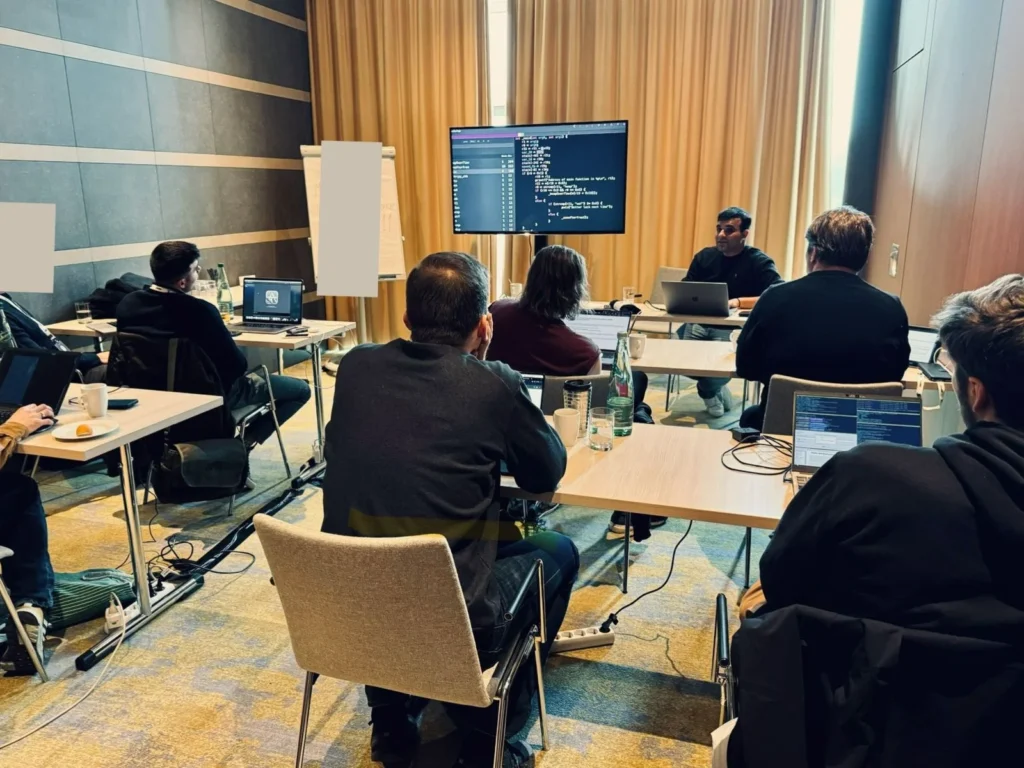
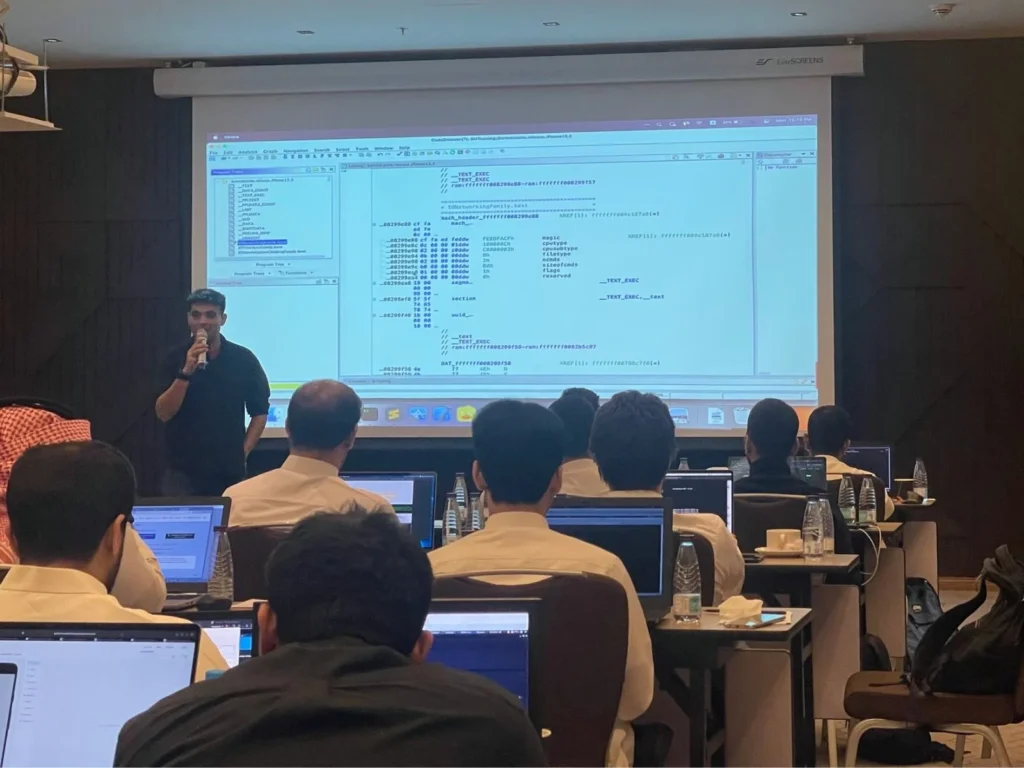
Our trainers boast more than ten years of experience delivering diverse training sessions at conferences such as Blackhat, HITB, Power of Community, Zer0con, OWASP Appsec, and more.

Take Your Skills To The Next Level
Our Modes Of Training
Live Virtual
Get in touch for pricing
Perfect for Teams in Multiple Locations
- Real-time interaction with expert trainers via Zoom
- Customizable content for your team
- Continued support after training
- Hands-on labs with cloud environments
Live On-Site
Get in touch for pricing
Perfect for Teams in One Location
- Real-time interaction at your onsite location
- Customizable content for your team
- Continued support after training
- Hands-on labs with cloud environments
FAQ
The information on this page is subject to change without notice.
Contact Us
Have a question or want to learn more about this training? Get in touch with us.
Our Location
51 Pleasant St # 843, Malden, MA, US, 02148
General Inquiries
contact@8ksec.io
Trainings
training@8ksec.io